Lead story

What does an 'AI‑generated' label in advertising actually tell us? (opens the original at techxplore.com in a new tab)
Advertising is about persuasion. It exists to sell products and lifestyles, ideas and stories.
Explore the frontier
Tracking the Evolution of Intelligence
Artificial Intelligence, AGI & Superintelligence News, Research, and Industry Intelligence.
Advertising is about persuasion. It exists to sell products and lifestyles, ideas and stories.
Backprop Bulletin practical guide Build an AI workflow that can resume after an interrupted run

A research team led by Professor Soon Moon Jeong of the Department of Advanced Technology at the Graduate School of Engineering Practice at DGIST, has developed a new sensing technology for soft robots that emits light whenever the robot moves, providing an intuitive visual representation of its movement trajectory without requiring separate batteries or complex electronic circuits. The study is published in the journal Small Structures.
Developing new materials often starts with understanding their electronic structure, or how electrons are arranged and behave within them. Calculating these electronic structures typically requires expensive simulations on supercomputers. That's led researchers to train artificial intelligence models on millions of simulated data points to make faster predictions.

No startup has ever grown so fast. In five years, Anthropic has become an AI giant valued at $1 trillion, and it is now aiming for a record-breaking stock market debut, even if its original ambitions have been watered down somewhat.

Agents Research preprint
The authors introduce Support-Gated World-Model decision support, a lightweight extension of a propose--simulate--refine agent.

Policy Research preprint
The paper evaluates the methodological potential of using large language models (LLMs) to generate synthetic datasets prior to real-world data collection, thereby streamlining subsequent processing and statistical analysis.

The use of algorithms to design structures has led to new parts optimized for ultralight aircraft, high-bandwidth antennas and F1 racing cars. But the best algorithmic design techniques still require lots of computation and time: Users only see the final design after it's complete, after which they often must start the design process all over again to make changes. That process also makes it harder to trust that the final designs are structurally sound.

Models Research preprint
The authors introduce LitArc-Bench to separate these explanations: 39 Chinese-language literary excerpts segmented into seven checkpoints, with 430 questionnaires from 81 adults in two classroom groups (9,020 VAD ratings).

Nvidia CEO Jensen Huang's stunning resignation has sent ripples through the global technology industry, with rival chipmakers itching to take advantage of the uncertainty and others wondering if the downfall of one of AI's biggest cheerleaders will dampen the mood around the civilization-altering technology.
Despite rapid improvement in computer vision models, which can perform accurate facial recognition or read the text printed on signs, their ability to distinguish the subtle visual qualities of objects, colors and light remains no match for the human eye, technology experts say.
The airline ground stop that has wreaked havoc on travel since Friday was not related to the FAA's new $875 million AI-powered system the agency is rolling out to help predict problems in the sky, according to government officials and the artificial intelligence company behind the technology.
Humans can create loose maps of environments they are exploring in their minds, using their senses and navigation skills. Many robots, on the other hand, rely on set maps of known environments or new maps produced using data collected by their sensors.
Models Research preprint
The authors introduce Gamer, a generalist agent framework built for long-horizon tasks in complex interactive environments.
Agents Research preprint
The authors report that smart home agents can act as grid operators in power outages and identify several new failure categories highlighting the current limitations across all of their models.
Tools Research preprint
The authors present PrivacyPR, a dataset of 4,131 merged GitHub pull requests (PRs) from 1,469 repositories, created between June 2018 and January 2024.
Policy Research preprint
The authors present scalable conversational assessment, an LLM-based system that conducts interactive text-based conversations with students to assess their ability to make and support an argument.
AI is often criticized for the energy its data centers consume, which is driving more fossil fuel use and contributing to climate change.
How can we scale up a quantum neural network? One way is to add more qubits as neurons. But a study titled "Quantum neural network equipped with backpropagation on a qudit processor" published in National Science Review shows another way.
Maybe the trouble started with the AI billionaire and the Silicon Valley chaos that followed talk of his infidelity, including with an alleged Chinese spy. Or maybe it was the Microsoft outage that, depending on how you looked at it, either cast millions of frustrated workers adrift or spared them from a daily, unrelenting electronic avalanche.
Researchers at Keele University have developed a physics-inspired AI model that achieved high accuracy in tests distinguishing genuine facial images from AI-generated or manipulated images.
A joint statement by the UK and Norway to deepen cooperation on AI , including compute, defence, AI security, and international governance.
Contains public sector information licensed under the Open Government Licence v3.0.Licence
Chip giant Infineon said Tuesday that the rapid buildout of AI data centers would not slow down despite growing resistance in the United States, even as it predicted the backlash would likely spread to other countries.
In a study published in Applied Thermal Engineering, a research team from the Changchun Institute of Optics, Fine Mechanics and Physics of the Chinese Academy of Sciences, together with collaborators, has developed a machine learning–assisted design strategy for a highly selective tungsten-based metasurface absorber and emitter.
Anthropic chief executive Dario Amodei pitched investors on safety and a strict hiring culture on Friday, days before the AI company's stock market debut.
Large language models (LLMs), the AI systems underpinning the functioning of ChatGPT, Gemini and other similar platforms, are now widely used worldwide. While the responses provided by these models can be useful in many situations, they can also change under specific conditions.
For the first time, researchers can track the movement of a person's entire body with ultrasonic sound waves, using just an off-the-shelf smartwatch and a lightweight artificial intelligence model—all while ensuring privacy and efficiency.
China is flexing its technological muscles at the global Web Summit in Lisbon starting Tuesday, showcasing dancing robots and low-cost artificial intelligence models as Beijing weathers claims that it spied on the AI chip powerhouse Nvidia.
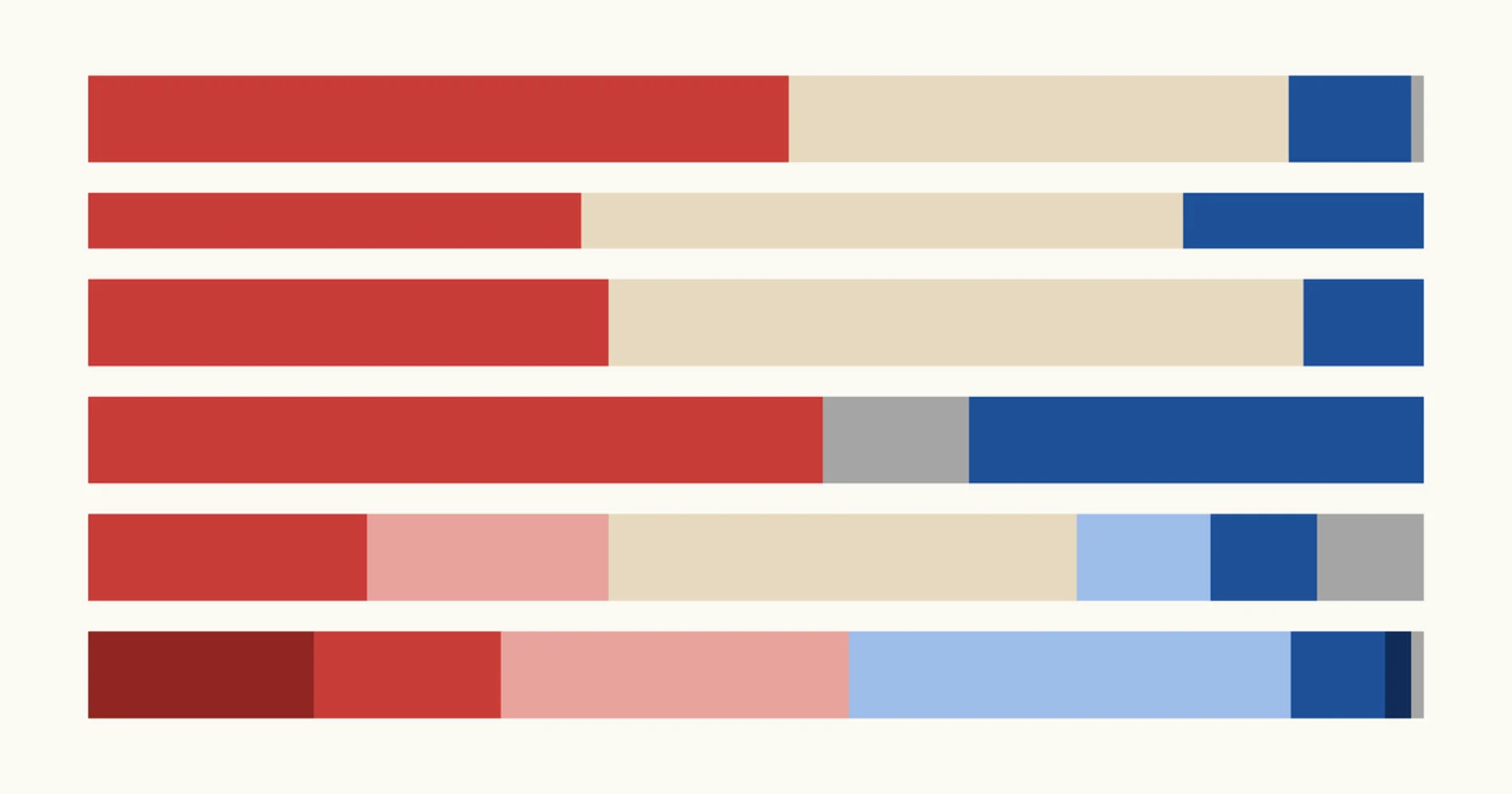
Five high-quality surveys ask about AI in different ways.
Microsoft said progress is being made in bringing its popular workplace software back online as a global outage enters its second day, disrupting business communications, police emergency calls, court operations and AI tools.
But in January, the federal government launched a program that uses AI to evaluate Medicare beneficiaries' requests for certain procedures.
Even with high-performance storage devices, inefficient data management can prevent them from reaching their full speed. KAIST researchers have developed a technology that improves the process of moving and reorganizing data to reuse storage space, increasing the data-processing performance of next-generation flash storage devices.
Nvidia CEO Jensen Huang resigned Thursday, capping a spectacular downfall for a poster boy of the artificial intelligence boom whose exit following reports of extramarital affairs now thrusts the chipmaker into an uncertain future.
Prime Minister Anthony Albanese has just announced six mandatory artificial intelligence (AI) safety guardrails.
Data centers at the heart of the artificial intelligence (AI) revolution could be cooled more effectively and economically with a hybrid system under development at the University of Waterloo that targets hotspots on computer chips with a single drop of boiling coolant.
No live stories are available right now. The next scheduled update runs within 15 minutes.
Show all storiesA joint research team from the Korea Advanced Institute of Science and Technology (KAIST) and Yonsei University has developed a flexible display that can communicate information to both humans and robots. Human workers can interpret information through visible color changes, while robots can detect near-infrared patterns invisible to the human eye. The technology could serve as an "electronic tag" attached to products or equipment, allowing humans and robots to monitor work status using the same display.
Hong Kong rolled out AI-powered facial recognition functions across its camera surveillance system on Monday, expanding monitoring of public spaces in the name of national security and crime prevention.
Three October 2026 events involving Trajectory Labs, PBC, in which agents probed our site and impersonated staff.
UK Government’s Sovereign AI and the British Business Bank back Fractile - a Bristol and London based frontier AI hardware firm developing advanced chips.
Contains public sector information licensed under the Open Government Licence v3.0.Licence
The EU's proposed Cloud and AI Development Act (CADA) is intended to strengthen Europe's cloud and AI sectors and reduce its dependence on providers from outside Europe. But according to researchers at the Institute for Information Law (IViR) at the University of Amsterdam, the proposal falls short of its goal. They are also concerned about the rapid expansion of data centers and the limited attention paid to sustainability and social impact.
Models Research preprint
The authors introduce a two-level ensemble that bridges this gap.