
What does an 'AI‑generated' label in advertising actually tell us? (opens the original at techxplore.com in a new tab)
Advertising is about persuasion. It exists to sell products and lifestyles, ideas and stories.
Explore the frontier
Tracking the Evolution of Intelligence
Artificial Intelligence, AGI & Superintelligence News, Research, and Industry Intelligence.
18 stories in Research.
Advertising is about persuasion. It exists to sell products and lifestyles, ideas and stories.
Developing new materials often starts with understanding their electronic structure, or how electrons are arranged and behave within them. Calculating these electronic structures typically requires expensive simulations on supercomputers. That's led researchers to train artificial intelligence models on millions of simulated data points to make faster predictions.
Despite rapid improvement in computer vision models, which can perform accurate facial recognition or read the text printed on signs, their ability to distinguish the subtle visual qualities of objects, colors and light remains no match for the human eye, technology experts say.
How can we scale up a quantum neural network? One way is to add more qubits as neurons. But a study titled "Quantum neural network equipped with backpropagation on a qudit processor" published in National Science Review shows another way.
In a study published in Applied Thermal Engineering, a research team from the Changchun Institute of Optics, Fine Mechanics and Physics of the Chinese Academy of Sciences, together with collaborators, has developed a machine learning–assisted design strategy for a highly selective tungsten-based metasurface absorber and emitter.
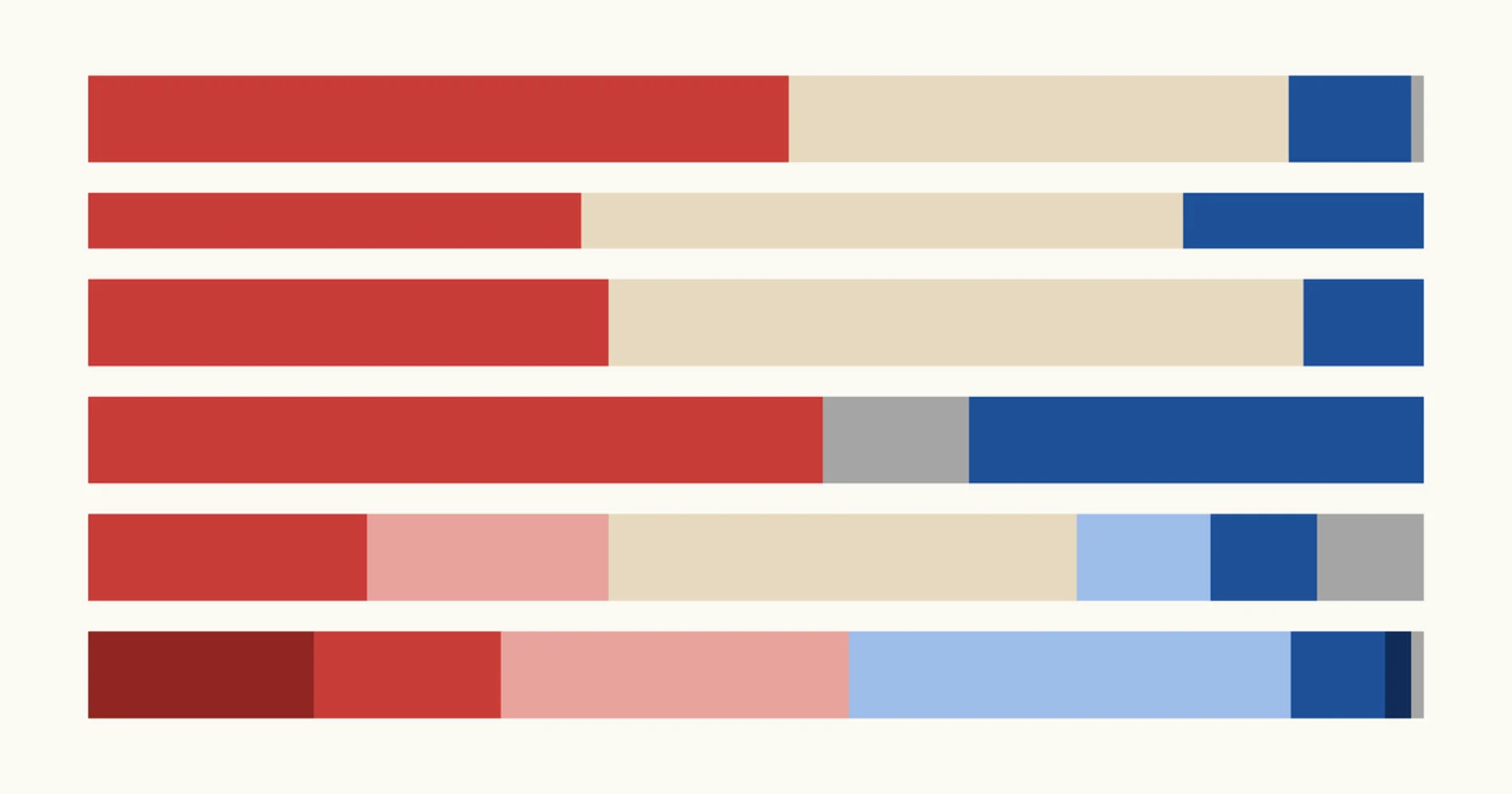
Five high-quality surveys ask about AI in different ways.
Research Research preprint
The EU AI Act imposes technical and organizational requirements for high-risk AI systems, but applying these requirements involves contextual choices about what to measure and what evidence supports a compliance claim.
People communicate with more than words. A raised hand, a change in posture or a facial expression can help convey meaning and emotion. Now, researchers have developed an artificial intelligence (AI) system that can translate speech into coordinated movements of the body, hands and face, potentially making digital characters and virtual presenters more expressive and lifelike.
Researchers from the Changchun Institute of Optics, Fine Mechanics and Physics of the Chinese Academy of Sciences have developed ETATrack, a single-stream network that combines visible-light and thermal-infrared images with selected historical frames. The study is published in the journal Infrared Physics & Technology.
Understanding speech from lip movements alone is difficult, particularly in noisy environments. A research team at the Korea Advanced Institute of Science and Technology (KAIST) has developed an AI technology that first recognizes words it can identify with high confidence and then uses the surrounding context to resolve ambiguous parts of the sentence.
Research Research preprint
The authors present X-Nav, to their knowledge the first system to take a bipedal humanoid through a language-instructed long-horizon mission from indoors to outdoors.
Research Research preprint
The authors find that widely-used reward models perform poorly on targeted visual reasoning evaluations.
Research Research preprint
A representation that retains one bit about a four-state world can solve a task perfectly, while another that retains 1.5 bits on average reaches only 75% accuracy.
Researchers at the University of Tartu Institute of Computer Science are working with the Estonian technology company GScan to develop AI-based methods that use measurement data collected with the help of cosmic particles to locate objects more accurately. The technology is useful for assessing the condition of bridges and other large structures and identifying potential damage.
Practically or theoretically, whether teaching a classroom full of Penn State students or pondering concepts with a smaller group of international colleagues, Heather Shoenberger brings curiosity and optimism as she considers the challenges and opportunities related to artificial intelligence.
The control of large-scale industrial bioreactors is one of the most complex tasks in the process industry. In the often huge plants, the smallest differences in temperature, pH value or oxygen content determine the success or failure of a process.
Research Research preprint
The authors propose HDH, a lightweight framework that uses hindsight from a frozen VLA's own deployments to improve action verification.
Artificial intelligence has moved from a specialized technology to an everyday reality for millions of people. According to the latest report from the One Hundred Year Study on Artificial Intelligence (AI100), the past five years have marked a watershed moment in AI's development, driven by advances in large-scale computing, vast datasets and the rapid rise of generative AI.
Try a different search term or category, or browse every live story.
Show all stories